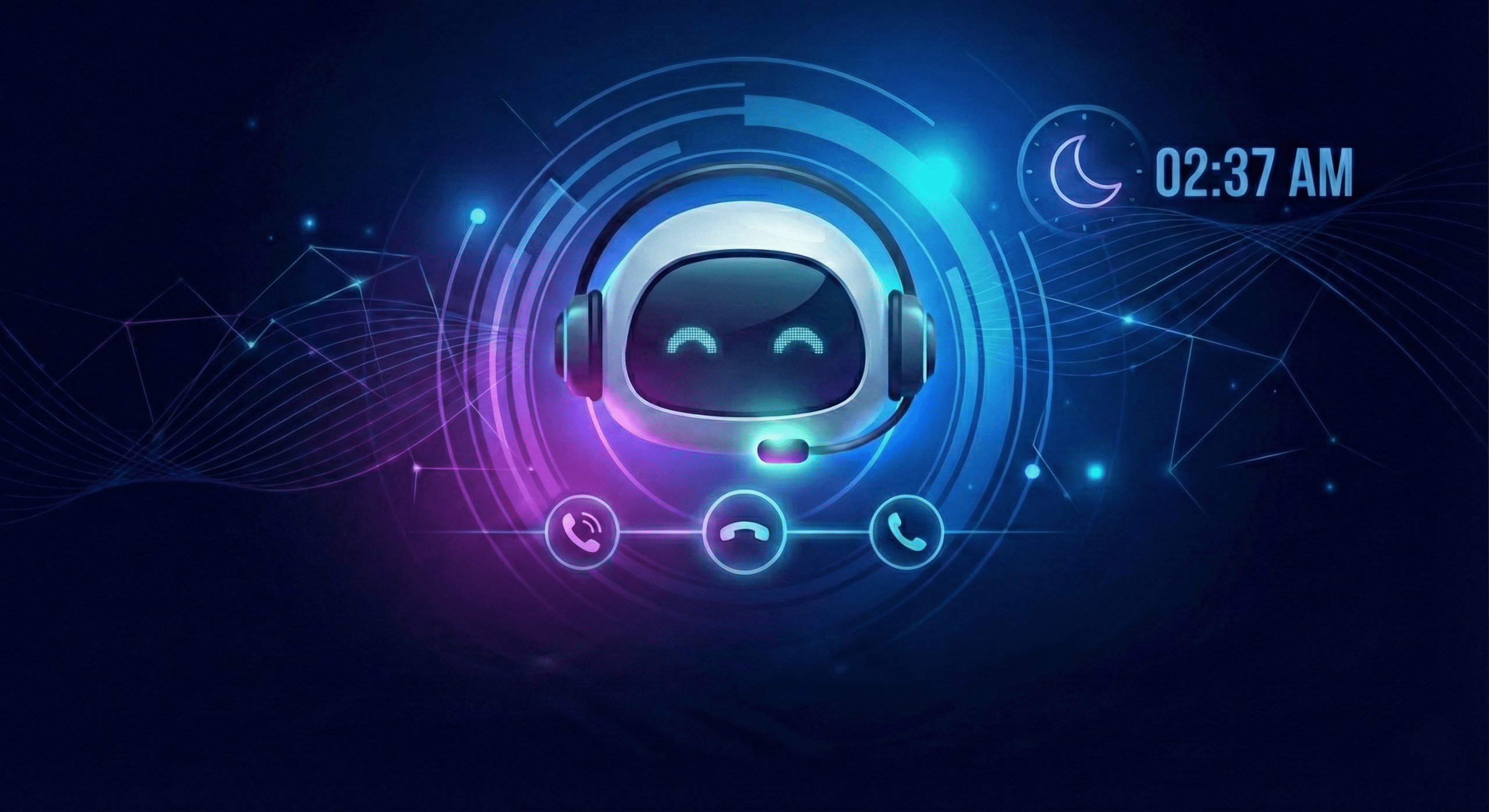
For many businesses, after-hours inbound calls are where opportunities quietly disappear. Prospects call when offices are closed. Existing customers need urgent help outside business hours. Partners reach out across time zones. Too often, these calls are met with voicemail, silence, or a generic “call back tomorrow” message.
In today’s on-demand world, that experience doesn’t just feel inconvenient—it feels unacceptable.
This is why inbound call center automation has become a critical capability rather than a nice-to-have. And it’s also why the always-on AI approach introduced in Meet Maxine: The AI Assistant That Never Sleeps is rapidly becoming the standard for handling after-hours communication without sacrificing quality or control.
The After-Hours Inbound Call Problem
Inbound call centers were historically designed around human schedules. When agents clock out, systems fall back on:
- Voicemail boxes
- Limited on-call staff
- Static auto-attendants
While these solutions technically “catch” calls, they fail to engage callers. From the customer’s perspective, after-hours contact often feels like hitting a dead end.
The business impact is significant:
- Missed sales leads
- Delayed issue resolution
- Lower customer satisfaction
- Reduced trust and brand perception
Automation changes this dynamic entirely.
What Inbound Call Center Automation Really Means
Inbound call center automation is not about removing humans—it’s about ensuring every call is answered, understood, and handled, even when agents are unavailable.
Modern automation, delivered through platforms like the inbound solutions from Maxlink Solutions, combines AI voice intelligence with enterprise-grade call routing to create a seamless after-hours experience.
At its core, automation enables:
- Instant call answering
- Natural language interaction
- Intent-based routing
- Context capture for follow-up
This is the same foundation that powers Maxine AI’s “never sleeps” capability highlighted in the main article.
Why After-Hours Calls Matter More Than You Think
After-hours callers are often high-intent.
They may be:
- Prospects finally free to call after work
- Customers facing urgent issues
- International clients operating in different time zones
When these callers reach voicemail, they don’t just wait—they often move on.
Automation ensures your inbound call center remains responsive long after human agents have signed off.
How Automation Handles After-Hours Inbound Calls
1. Instant Call Answering—No Voicemail Dead Ends
With inbound automation running on a scalable Cloud PBX, every call is answered immediately, regardless of time or volume.
There is no ringing, no holding, and no sense of unavailability. The caller is acknowledged instantly, which alone has a powerful effect on satisfaction and trust.
2. Conversational AI Instead of Static Menus
Traditional after-hours systems rely on rigid menus:
“Press 1 for sales. Press 2 for support.”
Inbound call center automation replaces this with natural conversation.
Using AI-driven IVR capabilities such as those supported in the Contact Center environment, callers can simply explain why they’re calling. The system understands intent and responds appropriately.
This conversational approach dramatically reduces friction—especially during off-hours, when patience is already low.
3. Intelligent Call Routing and Escalation
Not every after-hours call needs a human agent—but some do.
Automation allows businesses to define clear rules for:
- Emergency escalation
- On-call agent routing
- Priority-based handling
Calls can be routed intelligently using IVR logic or escalated when predefined conditions are met. Supervisors retain visibility through the Supervisor Dashboard, even outside standard hours.
4. Capturing Context for Next-Day Follow-Up
When a call doesn’t require immediate escalation, automation ensures nothing is lost.
Inbound automation captures:
- Caller identity
- Intent and reason for calling
- Conversation details
This context is passed into the inbound workflow so that when agents return, they already know who called and why. Customers don’t have to repeat themselves—a major contributor to positive experiences.
Global Businesses Need Always-On Inbound Automation
For organizations operating across regions, “after hours” is a moving target.
A call that’s after hours in one country may be business-critical in another. Automation removes the need to align staffing perfectly across time zones.
With tools like Virtual Number, businesses can maintain local presence globally, while automation ensures every inbound call is handled consistently.
This global continuity is one of the reasons AI-driven inbound automation plays such a central role in the Maxine AI approach outlined in the main profile article.
Automation Reduces Costs Without Reducing Quality
One of the biggest advantages of inbound call center automation is cost efficiency.
Instead of:
- Paying overtime
- Staffing night shifts
- Outsourcing after-hours support
Businesses use automation to handle the majority of inbound interactions intelligently.
Human agents are then reserved for:
- High-value conversations
- Complex issues
- Relationship-driven interactions
This hybrid model improves efficiency while maintaining service quality.
Beyond Voice: After-Hours Omnichannel Continuity
Modern inbound automation doesn’t stop at voice.
When integrated with:
- SMS for confirmations and follow-ups
- Secure document handling via e-Fax
Businesses can continue the conversation across channels—even after hours—without breaking context.
For example, an after-hours caller can receive confirmation or next steps via SMS, reinforcing responsiveness even when human agents are offline.
Why This Connects Directly to “Meet Maxine: The AI Assistant That Never Sleeps”
Inbound call center automation is the infrastructure that makes Maxine possible.
The always-on, conversational, after-hours handling described in Meet Maxine: The AI Assistant That Never Sleeps is powered by the same inbound automation principles:
- Instant response
- Intent understanding
- Intelligent routing
- Continuous availability
Maxine is the face of this automation—but inbound call center technology is the engine behind it.
Security, Control, and Reliability After Hours
After-hours automation must be just as secure and reliable as daytime operations.
Enterprise-grade inbound solutions ensure:
- Secure call handling
- Controlled escalation rules
- Full audit and visibility
System management and assistance remain available through the Support Portal, ensuring confidence even when operations run overnight.
Final Thoughts
After-hours inbound calls are no longer an edge case—they are a daily reality for modern businesses. Treating them as secondary interactions leads to missed opportunities and frustrated customers.
Inbound call center automation ensures that every call matters, no matter when it comes in.
By combining conversational AI, intelligent routing, and always-on infrastructure, businesses can deliver the same level of professionalism at midnight as they do at noon—exactly the promise delivered by Maxine.
Automation doesn’t replace your inbound team.
It extends them—around the clock.