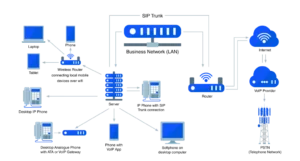
As demonstrated in The 3-Minute Miracle, the ability to launch a fully operational global call center in minutes depends on one critical shift: removing physical servers from the equation. This “no local hardware required” approach—central to Maxlink Solutions—is not just a convenience; it represents the future of how modern organizations build, scale, and protect their communications infrastructure.
For decades, on-premise servers were considered essential. Today, they’re increasingly viewed as an operational bottleneck.
The Legacy Model: Why Servers Became a Burden
Traditional phone systems and contact centers rely on physical PBX servers installed inside offices or data rooms. These systems require power, cooling, physical security, and constant oversight from IT teams. While this architecture once offered control, it now introduces friction at every stage of growth.
Upfront costs are the first hurdle. Hardware purchases, licensing fees, and installation expenses often demand significant capital investment before a single call is answered. Then comes maintenance—patching software, replacing aging components, and troubleshooting failures.
Most critically, physical servers create risk. A single point of failure—whether from power outages, hardware breakdowns, or natural disasters—can take an entire communication system offline. In an always-on, customer-driven economy, that level of vulnerability is no longer sustainable.
What “No Local Hardware Required” Actually Means
A hardware-free model doesn’t mean fewer devices; it means zero dependence on on-site infrastructure. With Maxlink, all core communication functions—call routing, recording, analytics, voicemail, and reporting—are delivered through the cloud. Businesses simply access the platform via the Maxlink unified communications interface from any location.
This eliminates the need to:
- Maintain PBX servers or telecom racks
- Schedule downtime for system upgrades
- Coordinate on-site vendor support
- Plan costly hardware refresh cycles
Everything is centrally managed, continuously updated, and instantly scalable.
Cloud PBX: The Foundation of Server-Free Operations
At the heart of this architecture is Maxlink’s Cloud PBX solution. It delivers all the features of a traditional enterprise PBX—extensions, call flows, voicemail, forwarding, and call recording—without physical equipment.
Administrators can manage users and policies remotely, while executives gain real-time insight into system health using the Cloud PBX at-a-glance dashboard. This level of visibility and control is difficult, if not impossible, to achieve with isolated on-premise systems.
Built-In Resilience Without Extra Infrastructure
Resilience is one of the most compelling arguments for zero server dependence. When communications are cloud-hosted, they are no longer tied to a single physical location. If an office loses power or internet access, calls can automatically reroute to remote agents, mobile devices, or alternate locations using the cloud contact center platform.
Supervisors retain full operational visibility through real-time monitoring tools, ensuring service levels remain stable even during localized disruptions. What once required expensive redundancy systems is now built directly into the platform.
Faster Scaling Without Hardware Constraints
Scaling is where traditional systems struggle most. Adding agents often means purchasing new servers, expanding licenses, and scheduling installations. With a hardware-free model, scaling is immediate.
Using SIP trunking services, businesses can increase call capacity on demand. New agents can be provisioned in minutes—regardless of location—making this model ideal for:
- Rapidly growing startups
- Seasonal or campaign-based support teams
- Enterprises expanding into new regions
- Remote and hybrid workforces
There’s no physical ceiling, only business demand.
Reduced IT Overhead, Increased Strategic Focus
On-premise servers consume IT resources. Teams must monitor hardware health, apply patches, manage security updates, and plan replacements. These tasks don’t drive revenue—they simply keep systems running.
By removing servers from the equation, IT teams shift from maintenance to strategy. They can focus on improving customer experience, integrating communications with CRM systems, and optimizing workflows instead of firefighting infrastructure issues.
Omnichannel Expansion Without Infrastructure Changes
Customer communication is no longer voice-only. Businesses now rely on chat, SMS, fax, and system integrations to meet customer expectations. In traditional environments, adding new channels often requires additional hardware or specialized equipment.
Maxlink simplifies this by consolidating all channels within its services ecosystem. Organizations can expand their communication capabilities without re-architecting their infrastructure—because there is no local infrastructure to change.
Security and Compliance Without On-Site Risk
Physical servers introduce security challenges: unauthorized access, outdated patches, and inconsistent compliance practices across locations. In a cloud-based model, security policies are centrally enforced and continuously updated.
This centralized approach reduces risk, improves compliance, and ensures that all communication data is protected by the same standards—without relying on local server management.
Cost Predictability and Financial Flexibility
Hardware-based systems often hide long-term costs: repairs, upgrades, and emergency replacements. Cloud-based, server-free operations replace these unpredictable expenses with transparent, scalable pricing.
Businesses can review and adjust their plans easily through Maxlink’s pricing structure, aligning communication costs with actual usage rather than over-provisioned hardware.
Why Hardware-Free Operations Are the Long-Term Standard
As businesses become more distributed and customer expectations continue to rise, physical servers increasingly act as anchors rather than assets. Hardware ties communication to a place. Cloud platforms tie communication to people.
Maxlink’s Why Maxlink Solutions approach reflects this shift—prioritizing flexibility, resilience, and speed over physical control.
Zero server dependence delivers:
- Instant deployment
- Built-in business continuity
- Effortless global scalability
- Lower operational risk
The future of business communications won’t live in server rooms. It will live in the cloud—where speed, reliability, and adaptability are built in by design