
Context Preservation: Letting Agents See What the Bot Discussed
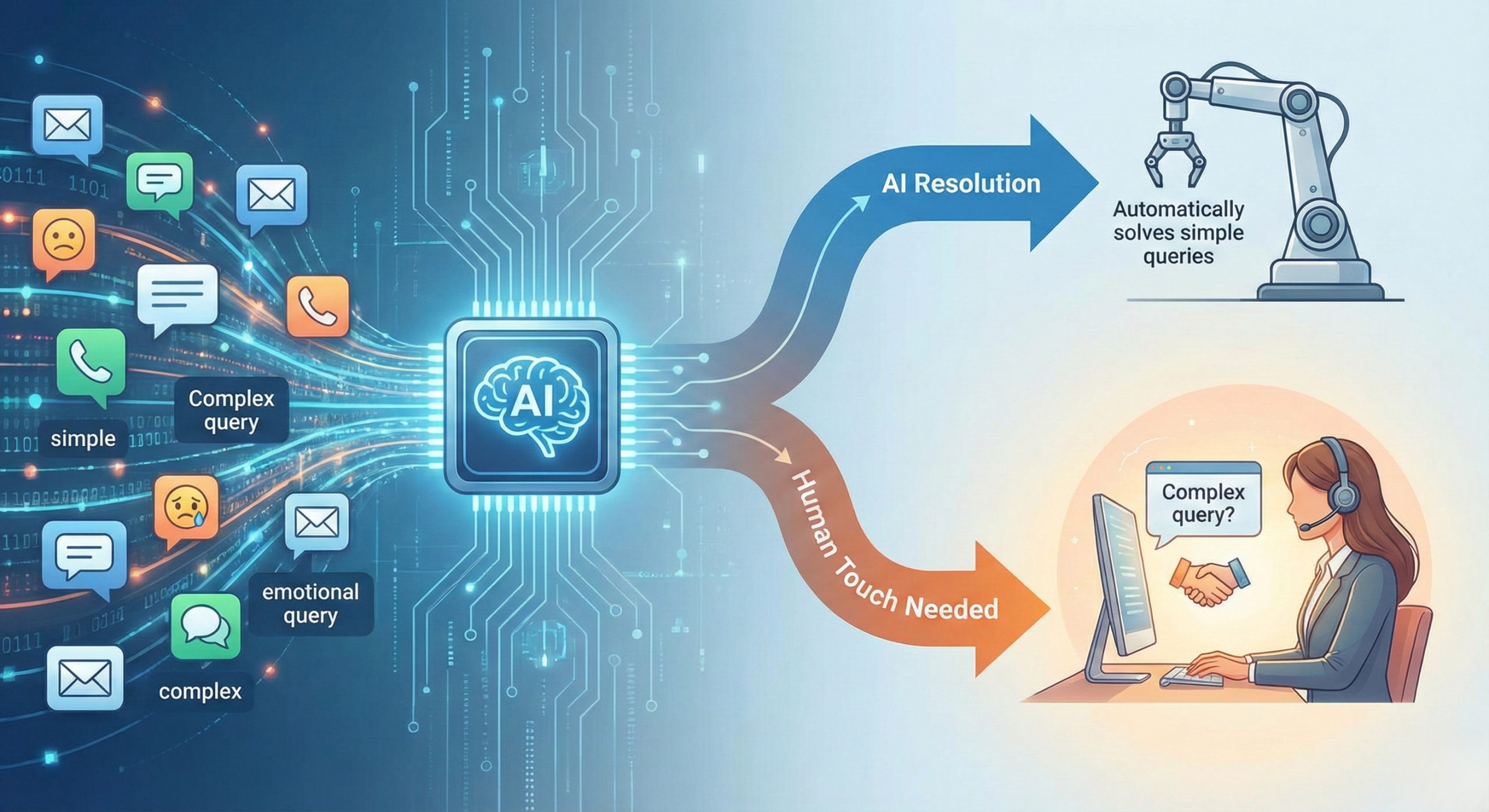
One of the most overlooked pillars of modern customer experience is context preservation—the ability for a human agent to instantly see what happened before they joined the conversation. As discussed in the main article, The Art of the Handoff: Escalating from AI to Human Without Friction, seamless escalation only works when the baton is passed cleanly, with full awareness of prior interactions. Without access to previous communication notes, even the most skilled agents are forced to start from zero, undoing all the efficiency gains AI was meant to create.
Context preservation isn’t just a technical feature. It’s a mindset shift in how businesses treat conversations—not as isolated tickets, but as evolving narratives supported by unified, omni-channel systems.
What Are “Previous Communication Notes” Really?
Previous communication notes are far more than basic chat transcripts. They are a structured, continuously updated record of everything that has already occurred between a customer and your communication platform, often captured across voice, chat, and messaging tools within a unified environment like a modern Contact Center platform.
These notes typically include:
- Questions asked by the bot
- Options selected in IVR menus
- Data the customer already provided
- Actions attempted or completed
- Emotional signals such as frustration or urgency
- Channel history (chat, SMS, voice, email)
When an agent receives a handoff with this information visible—whether the conversation originated via Cloud PBX chat or phone—they don’t just see what the customer said. They understand where the customer is in their journey.
Why Repetition Is the Fastest Way to Lose Trust
Few things frustrate customers more than repeating themselves.
From the customer’s perspective, repetition signals one of three things:
- The company isn’t listening
- The systems don’t talk to each other
- Their time isn’t valued
Even if the agent is polite and capable, being asked to restate an issue instantly lowers confidence. Context preservation solves this by eliminating unnecessary questions and allowing agents to confidently say:
“I can see you already explained this to our virtual assistant. Let me take it from here.”
That moment of continuity—made possible by integrated communication systems—can instantly shift the experience from frustration to relief.
How Bots and Humans Should Share the Same Memory
In poorly designed setups, bots and humans operate in parallel but disconnected systems. The bot gathers information, but the agent never sees it—or only sees fragments scattered across tools.
In a well-integrated workflow:
- Bots write structured notes in real time
- Notes are attached to a unified customer profile
- Agents see them instantly upon takeover
- Supervisors can review them later for quality and training
This shared memory is a core advantage of centralized platforms highlighted across Maxlink’s Solutions overview. The bot becomes a first-stage assistant to the human agent—not a disposable gatekeeper.
The Difference Between Transcripts and Usable Context
Many platforms claim they “pass chat transcripts” to agents. But raw transcripts are often long, unstructured, and difficult to scan—especially during high-volume periods.
Effective previous communication notes are:
- Summarized, not dumped
- Highlighting intent and key facts
- Time-stamped and channel-aware
- Easy to scan at a glance
Instead of forcing an agent to read dozens of messages, systems should surface:
- The customer’s primary goal
- What’s already been attempted
- Where the bot reached its limit
Features like Cloud PBX Glance help agents absorb this context instantly, turning information into a productivity booster rather than a distraction.
Faster Resolution Starts Before the Agent Speaks
When agents can see prior bot interactions immediately:
- Average handle time decreases
- First-contact resolution improves
- Fewer clarifying questions are needed
- Customers feel understood sooner
Rather than spending the opening minutes gathering background, agents can focus on resolution. At scale, this efficiency compounds—especially in environments powered by reliable voice infrastructure such as SIP Trunking.
Reducing Cognitive Load for Agents
Agent fatigue isn’t just about call volume—it’s about mental friction.
Every time an agent has to:
- Ask basic questions again
- Guess what happened earlier
- Switch between disconnected systems
- Reconstruct the conversation manually
…their cognitive load increases.
Previous communication notes act as a mental shortcut. Agents begin the interaction oriented and confident, which:
- Improves focus
- Reduces stress
- Increases confidence
- Leads to higher-quality interactions
Over time, this directly impacts retention and performance—especially in blended environments that combine voice, chat, and messaging through tools like SMS communication platforms.
Context Preservation Enables Smarter Escalation Rules
When bots are capable of recording structured notes, escalation becomes more intelligent.
Instead of escalating solely based on:
- Keywords
- Time limits
- Failed responses
Escalation can be triggered by:
- Repeated confusion
- Emotional signals
- High-value customer indicators
- Complex, multi-step requests
With supervisory oversight enabled through CTI and monitoring tools, agents understand why the escalation happened—not just that it did.
Supervisors Benefit Too (Even If Customers Never See It)
Previous communication notes are just as valuable for supervisors as they are for agents.
They enable leaders to:
- Audit real conversation quality
- Identify where bots struggle most
- Improve AI training and workflows
- Coach agents using real context
Instead of relying on surface-level metrics, supervisors gain visibility into real interactions—especially when paired with collaboration tools like Receptionist consoles.
Context Preservation Across Channels Matters More Than Ever
Modern customers rarely stay on a single channel.
They might:
- Start on chat during work hours
- Switch to SMS while commuting
- Call later for resolution
If context doesn’t follow them, the experience breaks. With unified systems—supported by tools like Virtual numbers and voice broadcasting capabilities—the conversation continues seamlessly, no matter how or where the customer reconnects.
Privacy and Accuracy: Two Non-Negotiables
Context preservation must be handled responsibly.
That means:
- Showing agents only relevant information
- Masking sensitive data when necessary
- Keeping notes accurate, structured, and auditable
Secure access through platforms like the Support Portal ensures that trust is maintained not just externally, but internally across teams.
The Long-Term Impact: Better Data, Better Decisions
Over time, stored communication notes become a powerful source of insight:
- Common customer pain points
- Escalation trends
- Training gaps
- Product or service issues
Organizations that treat these notes as strategic assets—not operational leftovers—gain a measurable advantage in optimizing customer experience and long-term service strategy, especially when supported by scalable plans outlined in flexible Pricing options.
Final Thoughts: Context Is Respect, in Digital Form
At its core, context preservation is about respect.
Respect for the customer’s time.
Respect for the agent’s mental energy.
Respect for the conversation itself.
When agents can see what the bot already discussed, the handoff feels natural, intelligent, and human. And when that foundation is in place, AI stops being a barrier and becomes what it was always meant to be—a powerful ally in delivering exceptional customer experiences.
Related Posts

How Downtime Damages Brand Loyalty
How Downtime Damages Brand Loyalty In the main article on the ROI of reliability, we focused on how 99.999% uptime protects revenue—but revenue is only part of the story. Reliability also determines how customers feel about your brand. When communication systems fail, trust erodes quickly, and once brand loyalty is damaged, it’s difficult and expensive to rebuild. In this supporting article, we’ll examine the business impact of downtime on brand loyalty, explain why reliability is a customer experience issue (not just an IT one), and show how reliability-first platforms like Maxlink Solutions help protect long-term brand value. Downtime Is

Disaster Recovery: Keeping Lines Open When the Internet Glitches
In our main article on the ROI of reliability, we explored how 99.999% uptime protects revenue—but reliability is only possible when disaster recovery is built into the system from day one. Internet outages, regional disruptions, and traffic spikes are inevitable; what matters is whether your communications platform can route around failure instead of collapsing under it. In this supporting article, we’ll focus on redundancy—the core principle that keeps business lines open even when networks falter—and how providers like Maxlink Solutions engineer disaster recovery into everyday operations. Why Internet Glitches Are a Business Risk, Not Just an IT Issue A brief

The ROI of Reliability: What 99.999% Uptime Actually Means for Your Revenue
Reliability isn’t a technical buzzword—it’s a revenue strategy. In modern communications, the difference between 99.9% and 99.999% uptime can mean thousands (or millions) in saved revenue, protected brand trust, and uninterrupted customer experiences. That’s why businesses are increasingly prioritizing providers who engineer for reliability from the ground up. In this article, we’ll unpack what 99.999% SLA uptime really means, quantify the true cost of downtime, and explain how a serverless architecture—like the one used by Maxlink Solutions—delivers measurable ROI through business continuity. What Does 99.999% Uptime Actually Mean? A 99.999% uptime SLA (often called “five nines”) sounds abstract—until you translate

Pay-As-You-Go vs. Fixed Contracts: What’s Best for Startups?
Pay-As-You-Go vs. Fixed Contracts: What’s Best for Startups? Startups thrive on flexibility, agility, and lean operations. Just as moving to the cloud can save up to 50% on telephony costs—as we explored in Cut Costs, Not Corners—choosing the right billing model for your communications infrastructure can dramatically affect your cash flow and growth trajectory. In this article, we’ll compare pay-as-you-go (PAYG) and fixed contracts, focusing on why startups benefit most from flexible, usage-based approaches, and how platforms like Maxlink Solutions make the transition effortless. Understanding the Two Models Fixed Contracts: Predictable but Restrictive Fixed contracts lock startups into a set

The Hidden Costs of On-Premise Servers vs. Serverless Architecture
The Hidden Costs of On-Premise Servers vs. Serverless Architecture As businesses explore ways to cut telephony and IT costs, one of the biggest savings comes from moving away from on-premise servers. Just like switching to cloud telephony can save up to 50% on average, shifting from traditional server setups to serverless architecture eliminates hidden maintenance costs while boosting efficiency. In this article, we’ll break down the true cost of on-premise servers, explain how serverless models reduce expenses, and highlight why modern solutions like those from Maxlink Solutions make the transition seamless. For more insights, read Cut Costs, Not Corners: How

Cut Costs, Not Corners: How Moving to the Cloud Saves 50% on Telephony
Cut Costs, Not Corners: How Moving to the Cloud Saves 50% on Telephony For years, business telephony followed the same expensive pattern: buy hardware upfront, maintain it forever, and replace it every few years when it becomes outdated. Today, that model is rapidly disappearing. Companies moving to cloud-based telephony are saving up to 50% on average—not by cutting features, but by eliminating inefficiencies. The shift isn’t just a technology upgrade. It’s a financial strategy. In this guide, we’ll break down why cloud telephony reduces costs so dramatically, explain the difference between CapEx vs. OpEx, and show how pay-for-what-you-use models help