Data has never been the problem.
Most businesses are drowning in metrics — call volumes, response times, ticket counts, conversion rates, sentiment scores, agent performance, and more. The real challenge is fragmentation. When data lives in silos, insights arrive late, decisions rely on instinct, and opportunities slip by unnoticed.
Unified reporting changes that.
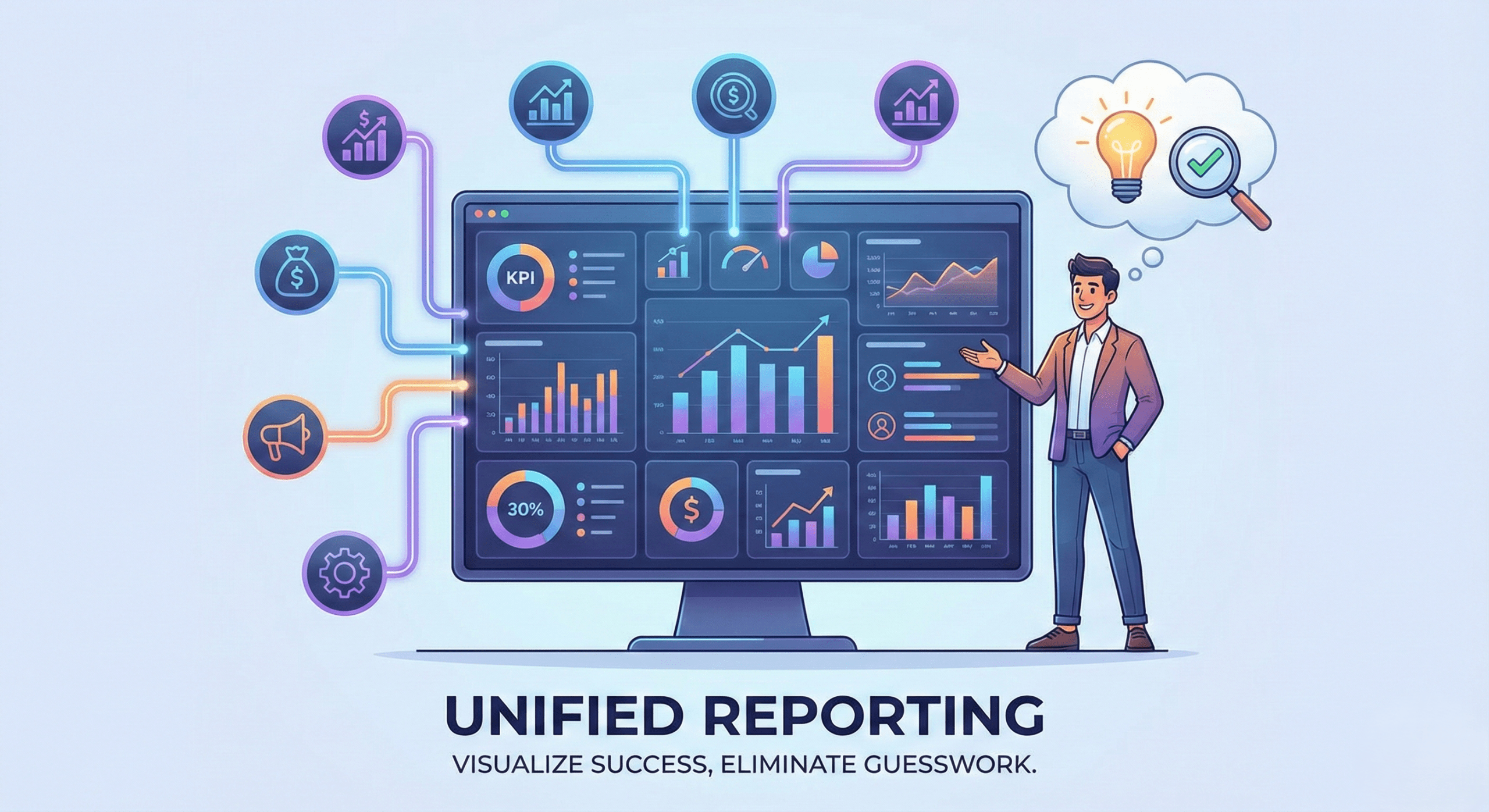
It brings every critical KPI into a single, visual, real-time view — transforming scattered numbers into clarity, alignment, and action.
When unified reporting brings emotional data into focus, it reinforces the retention strategy outlined in Stop Guessing, Start Knowing: Using Sentiment Analysis to Retain Customers by turning sentiment insights into clear, visual business decisions.
The Cost of Disconnected Metrics
When reporting tools are fragmented, teams face common issues:
- Customer experience data lives separately from operational metrics
- Support leaders see volume, but not emotion
- Executives get summaries without context
- Agents work blind to performance trends
For example, a spike in call volume might look like a staffing issue — until sentiment data reveals rising frustration tied to a recent process change. Without unified reporting, that connection is easy to miss.
Platforms built around centralized communication and analytics, like Maxlink’s contact center solutions, are designed to eliminate these blind spots.
What Is Unified Reporting?
Unified reporting consolidates data from multiple communication channels and systems into one cohesive reporting layer.
This includes insights from:
- Voice calls handled through Cloud PBX
- Chat and messaging interactions
- SMS engagement metrics
- Contact center performance
- Agent activity and availability
- Customer sentiment and trends
Instead of switching between tools, teams see the full operational picture in one place — updated continuously.
From Raw Data to Business KPIs That Matter
Not all metrics are equal. Unified reporting focuses on KPIs that actually influence outcomes, such as:
- Customer satisfaction and sentiment trends
- First-contact resolution by channel
- Average response time vs emotional impact
- Agent effectiveness over time
- Peak interaction periods
- Escalation frequency and root causes
When these KPIs are visualized together, patterns emerge that static reports simply can’t show.
Visualizing Performance Across Teams and Channels
One of the biggest strengths of unified reporting is cross-functional visibility.
For Support Leaders
They can correlate:
- Call volume with sentiment shifts
- Agent workload with resolution quality
- Escalations with specific workflows
This is especially powerful when paired with supervisor monitoring and analytics tools, enabling faster, smarter intervention.
For Executives
Leadership gains a high-level view of:
- Customer health
- Operational efficiency
- Retention risks
- ROI of support investments
Instead of asking for multiple reports, decision-makers see one source of truth.
Unified Reporting and Customer Retention
Retention depends on early signals — not late reactions.
Unified reporting allows teams to:
- Spot declining sentiment before churn
- Identify accounts with repeated negative interactions
- Track how changes impact customer emotion over time
When sentiment analysis is visualized alongside operational KPIs, teams can understand why customers feel the way they do, not just how often they contact support.
This directly supports the strategy explored in Stop Guessing, Start Knowing: Using Sentiment Analysis to Retain Customers, where emotional insight becomes a retention tool rather than an afterthought.
Turning Dashboards into Action
Good reporting doesn’t just inform — it guides action.
With unified dashboards, teams can:
- Adjust staffing based on real demand
- Refine IVR flows using interaction data from intelligent call routing
- Improve scripts that correlate with negative sentiment
- Identify high-performing agents and replicate success
The goal isn’t more charts — it’s faster, more confident decisions.
Unified Reporting in a Multi-Channel World
Customers don’t think in channels — and neither should your reporting.
A single customer might:
- Call your support line
- Follow up via chat
- Receive an SMS update
- Escalate later through another channel
Unified reporting connects these touchpoints into a single journey, revealing friction points that channel-specific reports miss.
This omnichannel visibility is critical for businesses using integrated communication tools like voice, messaging, and collaboration under one platform.
Supporting Growth Without Complexity
As businesses scale, reporting often becomes harder — not easier.
Unified reporting is built to scale because:
- New channels plug into the same reporting layer
- KPIs remain consistent across teams
- Historical data stays connected
- Insights improve over time
Whether you’re managing a small support team or a global operation, unified reporting grows with you — without adding reporting overhead.
Why Unified Reporting Is a Strategic Advantage
Businesses that rely on disconnected reports react slower.
Businesses with unified reporting act with confidence.
By visualizing KPIs clearly and contextually, teams move from:
- Guessing → knowing
- Reacting → predicting
- Managing volume → managing experience
This approach reflects the broader philosophy behind Maxlink’s solutions ecosystem — integrated communication, integrated intelligence, integrated outcomes.
Seeing the Full Picture Changes Everything
You can’t improve what you can’t clearly see.
Unified reporting turns communication data into insight, insight into strategy, and strategy into measurable results. When KPIs are visualized together — sentiment, performance, volume, and outcomes — businesses stop operating in fragments and start operating with intent.
And when paired with sentiment analysis, unified reporting becomes more than a dashboard — it becomes a retention engine.