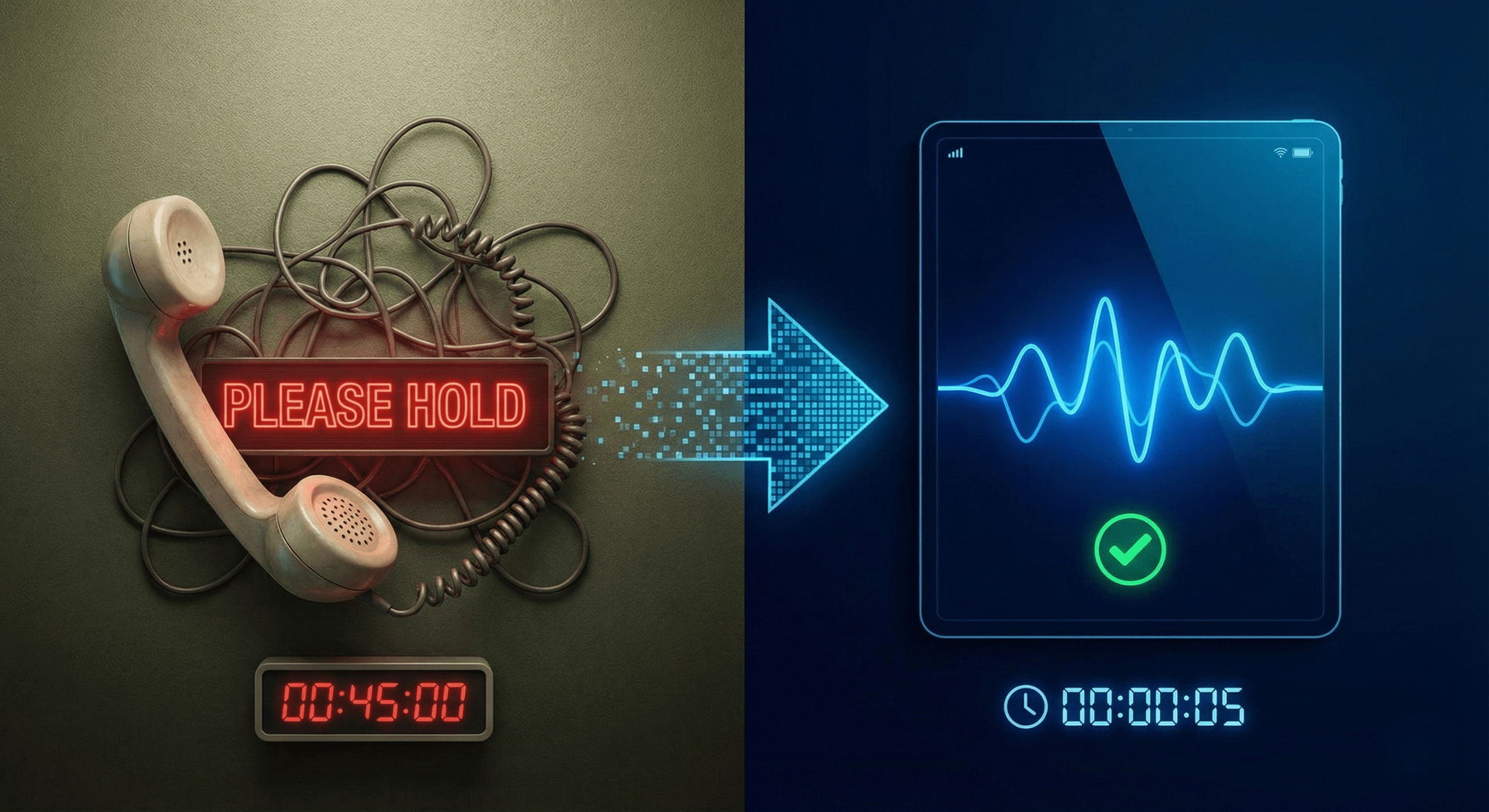
For decades, “Please hold while we connect you to the next available agent” has been the most dreaded phrase in customer service. Long wait times, repetitive menus, and endless transfers have conditioned customers to expect frustration before help. Today, that expectation is being dismantled—fast. The AI revolution in voice communication is rewriting how businesses answer calls, resolve issues, and build loyalty. At the center of this shift are AI Voice Bots and the AI Receptionist, designed to answer instantly, understand intent, and act—without putting callers on hold.
This article explores how AI-powered voice experiences are ending wait times for good, why Natural Language Processing (NLP) is the engine behind that change, and how modern platforms like Maxlink Solutions are delivering measurable gains in customer satisfaction and operational efficiency.
Why “Please Hold” Became the Norm (and Why It’s Finally Obsolete)
Traditional call centers were built around human availability. When call volume exceeded staffing, queues formed. IVR trees tried to manage the load but often made things worse—forcing callers to navigate rigid menus that didn’t match their needs. Even the best teams struggled during peak hours, seasonal spikes, or after-hours.
AI changes the equation by decoupling responsiveness from headcount. With an AI Voice Bot answering instantly, every caller is “first in line.” There’s no queue to wait in, because the system scales in real time.
Platforms designed for modern communications—like the unified solutions offered by Maxlink Solutions—are now embedding AI directly into voice workflows, so businesses don’t have to choose between speed and quality.
What Is an AI Voice Bot (Really)?
An AI Voice Bot is not a scripted IVR with a friendly voice. It’s an intelligent, conversational system that listens, understands, and responds in natural language. The key difference lies in intent recognition.
Instead of forcing callers to say exact keywords (“Press 2 for billing”), AI Voice Bots use NLP to interpret meaning:
- “I need to change my plan”
- “My invoice looks wrong”
- “Can I speak to someone about pricing?”
All of these expressions point to clear intents—and the bot routes, resolves, or escalates accordingly.
When paired with an AI Receptionist, the experience feels less like a system and more like a capable front-desk assistant that never sleeps.
The AI Receptionist: Your Best First Impression, 24/7
The AI Receptionist is the frontline of the AI voice experience. It greets callers instantly, identifies their needs, and takes action—day or night. Unlike human receptionists, it doesn’t get overwhelmed during rush hours, and unlike legacy IVRs, it doesn’t trap callers in loops.
Modern implementations integrate tightly with business phone systems such as Cloud PBX, enabling the receptionist to:
- Answer every call immediately
- Route calls intelligently based on intent, availability, or priority
- Provide information (hours, locations, order status) without agent involvement
- Schedule callbacks or appointments
- Transfer calls with full context when a human is needed
Because it operates within a unified communications environment—covering Phone, Chat, and SMS—the AI Receptionist maintains continuity across channels. Customers don’t have to repeat themselves when they switch from voice to text or chat.
How NLP Eliminates Wait Times by Understanding Intent
At the heart of AI Voice Bots is Natural Language Processing. NLP allows the system to move beyond keywords and understand what the caller means, even when phrasing varies or emotions run high.
Intent Over Keywords
Legacy IVRs fail because they rely on exact matches. NLP-powered bots, on the other hand, analyze:
- Sentence structure
- Context
- Synonyms and paraphrasing
- Conversational cues
So when a customer says, “I’ve been charged twice,” the system understands it as a billing dispute, not just a random complaint. That understanding triggers the right workflow—often resolving the issue instantly or routing it to the correct team without delay.
Continuous Learning
Modern AI Voice Bots improve over time. As they interact with more callers, they refine intent models and responses. Integrated analytics—especially within a robust Contact Center environment—help supervisors monitor outcomes and optimize flows using real data rather than guesswork.
Instant Answers, Higher Customer Satisfaction
Customer satisfaction is directly tied to time to resolution. Every second a caller waits increases frustration. AI Voice Bots attack this problem at the source.
Immediate Pickup
No rings. No queues. Calls are answered instantly, even during peak traffic or after hours.
Faster Resolution
Common requests—account info, appointment booking, order tracking—are handled without human intervention. For more complex needs, the bot routes the call intelligently, often bypassing multiple transfers.
Consistent Experience
Unlike human agents who may vary in tone or knowledge, AI delivers consistent, on-brand responses every time. When supported by features like intelligent IVR and real-time oversight via the Supervisor dashboard, quality stays high at scale.
The result? Shorter calls, happier customers, and better reviews.
Beyond Voice: AI as Part of a Unified Communication Strategy
The real power of AI emerges when voice bots are embedded into a broader communications ecosystem. Businesses don’t operate on voice alone—and neither do customers.
With Maxlink’s integrated approach across Solutions and Our Services, AI Voice Bots can trigger or hand off to other channels seamlessly:
- Send confirmations or follow-ups via SMS
- Route conversations to live chat when appropriate
- Share documents through secure e-fax using e-Fax
- Integrate with CTI systems like CTI for full CRM context
This omnichannel continuity ensures that customers never feel stuck waiting—no matter how they choose to engage.
Use Cases Where AI Voice Bots Kill Wait Times
1. High-Volume Customer Support
During product launches or service outages, call volume can spike dramatically. AI Voice Bots absorb the surge, handling repetitive questions and triaging issues so human agents focus on complex cases.
2. Sales and Lead Qualification
An AI Receptionist can qualify inbound leads, answer pricing questions, and route high-intent callers to sales instantly. When paired with smart routing in Cloud PBX features like At-a-Glance Call Management, no opportunity is missed.
3. After-Hours Support
Customers don’t operate on a 9-to-5 schedule. AI ensures calls are answered after hours, capturing requests, providing information, or scheduling callbacks—without paying overtime.
4. Distributed and Remote Teams
For businesses with virtual teams or remote offices, features like the Virtual Number and Receptionist Console allow AI to route calls globally while maintaining a local presence.
AI Voice Bots vs. Human Agents: Collaboration, Not Replacement
One of the biggest misconceptions about AI in customer service is that it replaces humans. In reality, it augments them.
AI Voice Bots handle the repetitive, time-consuming front-end work—freeing agents to focus on empathy, problem-solving, and high-value interactions. When a call needs a human touch, the AI passes full context so agents don’t start from scratch.
This collaboration reduces burnout, improves first-call resolution, and makes teams more productive. It’s also why businesses exploring AI often begin with a hybrid model inside their contact centers.
Measuring Success: KPIs That Actually Matter
To understand the impact of AI Voice Bots on wait times and satisfaction, businesses should track:
- Average Speed of Answer (ASA)
- Call Abandonment Rate
- First Contact Resolution (FCR)
- Customer Satisfaction (CSAT)
- Agent Utilization
With centralized insights available through contact center analytics and supervisor tools, optimization becomes continuous—not reactive.
Security, Reliability, and Trust
Answering instantly is meaningless if the system isn’t secure or reliable. Enterprise-grade platforms ensure:
- Encrypted voice traffic
- Secure authentication for account-specific requests
- High availability infrastructure
- Compliance with regional regulations
Access to help and configuration is also critical. Teams can manage deployments, updates, and performance through the dedicated Support Portal, ensuring smooth operations as AI capabilities expand.
Getting Started: From Strategy to Deployment
Adopting AI Voice Bots doesn’t require ripping out existing systems. Modern platforms integ
- Identifying high-volume, repetitive call types
- Designing intent flows for the AI Receptionist
- Integrating with Cloud PBX and contact center tools
- Monitoring performance and refining responses
rate with current phone infrastructure, SIP services, and CRMs. Businesses typically start by:
Transparent costs and scalable options—outlined clearly on the Pricing Plans page—make it easier to align investment with growth.
For organizations seeking deeper collaboration or resale opportunities, the Partner Program offers a structured path to deliver AI-powered communications to clients.
Why This Is Just the Beginning
The end of “Please hold” isn’t a tagline—it’s a structural shift in how businesses communicate. As AI Voice Bots evolve, we’ll see even deeper personalization, predictive routing, and proactive outreach through features like Voice Broadcasting.
What won’t change is customer expectation. Instant answers are no longer a bonus; they’re the baseline. Businesses that embrace AI-driven voice experiences now will set the standard for satisfaction tomorrow.
To understand why this transformation matters—and why organizations are choosing this path—explore the thinking behind it on Why Maxlink Solutions.
Final Thought
Long wait times were once accepted as inevitable. AI Voice Bots and AI Receptionists prove they were simply a limitation of old systems. With intent-driven conversations, instant response, and seamless integration across channels, the era of “Please hold” is ending—permanently.