Is Your Business “Voice-First”? Why Omnichannel is the New StandardIs Your Business “Voice-First”? Why Omnichannel is the New Standard
Customers don’t think in channels anymore—they think in conversations. One moment they’re calling your support line, the next they’re sending a WhatsApp message, replying to an SMS, or dropping a comment on social media.
If your business still treats these touchpoints separately, you’re already behind.
Welcome to the era of the voice-first omnichannel platform—where every interaction starts with conversation, but seamlessly continues across channels in one unified experience.
What Does “Voice-First Omnichannel” Really Mean?
A voice-first omnichannel platform is a communication ecosystem where:
- Voice (phone calls) remains the core channel
- Chat, SMS, and social media are fully integrated
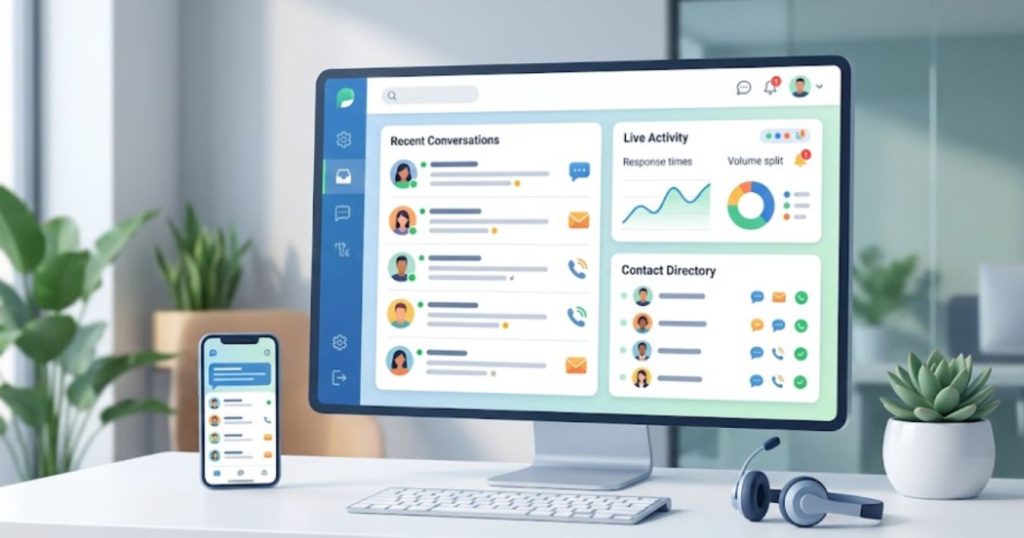
- All conversations are managed from one centralized dashboard
Instead of juggling multiple tools, your team operates from a single interface where every customer interaction—regardless of channel—is visible, trackable, and actionable.
This is not just multichannel.
It’s true omnichannel, where context travels with the customer.
Why Voice Still Comes First
Despite the rise of messaging apps, voice remains the most trusted and immediate communication method—especially for:
- Urgent support issues
- High-value transactions
- Complex problem resolution
With solutions like Cloud PBX, businesses can build a robust voice infrastructure that is:
- Scalable
- Cloud-based
- Integrated with digital channels
Voice becomes the anchor, not the only channel.
The Omnichannel Stack: How Everything Works Together
Let’s break down how each communication channel fits into a voice-first omnichannel platform:
1. Phone (Voice): The Foundation
Your phone system is no longer just about making calls—it’s about intelligent routing, automation, and analytics.
With tools like:
You can:
- Route calls based on customer intent
- Provide self-service options
- Track performance in real time
Voice becomes smarter—and more efficient.
2. Chat: Instant Digital Conversations
Customers expect instant answers. Chat allows businesses to deliver real-time support without the friction of a call.
Integrated chat (via your omnichannel dashboard) ensures:
- Agents see full customer history
- Conversations can escalate to voice instantly
- No context is lost between interactions
Even within Cloud PBX, chat becomes part of a unified experience.
3. SMS: High Engagement, Low Effort
SMS continues to outperform most channels in open rates.
With SMS solutions, businesses can:
- Send alerts, reminders, and updates
- Enable two-way communication
- Follow up after calls automatically
Imagine a customer calls support—and immediately receives a follow-up SMS with a resolution summary. That’s omnichannel in action.
4. Social Media: Where Conversations Begin
For many customers, social platforms are the first touchpoint.
An omnichannel platform brings social conversations into the same dashboard, allowing agents to:
- Respond to messages and comments
- Convert social inquiries into support tickets
- Maintain consistent tone and response time
No more switching between apps. Everything lives in one place.
The Power of One Dashboard
The real magic of omnichannel isn’t the channels—it’s the unification.
With a centralized system like the Contact Center platform, businesses gain:
- 360° customer visibility
- Seamless channel switching (call → chat → SMS)
- Real-time analytics and reporting
- Supervisor monitoring tools like CTI dashboards
Your team stops reacting—and starts managing conversations strategically.
Beyond Communication: Collaboration & Automation
A true voice-first omnichannel setup goes further with collaboration tools like:
These features help businesses:
- Automate repetitive tasks
- Scale outreach campaigns
- Maintain professionalism across all touchpoints
Why Businesses Are Making the Shift
Companies adopting omnichannel platforms are seeing:
- Higher customer satisfaction
- Faster resolution times
- Increased agent productivity
- Better data-driven decisions
And most importantly—they’re meeting customers where they already are.
Explore how this transformation works in practice on the Solutions overview or dive into specific offerings under Our Services.
Is Your Business Ready?
If your communication still looks like:
- Separate tools for calls, chat, and SMS
- No shared customer history
- Delayed responses across channels
…it’s time to rethink your approach.
A voice-first omnichannel strategy isn’t just a tech upgrade—it’s a customer experience revolution.
Take the Next Step
Whether you’re scaling support or optimizing sales conversations, the right platform makes all the difference.
Or grow your business through the Partner Program
Final Thoughts
The future of business communication isn’t about choosing between voice, chat, or SMS.
It’s about bringing them together—intelligently, seamlessly, and strategically.
Because in a world where customers expect instant, consistent, and personalized interactions…
Omnichannel isn’t optional anymore—it’s the standard.