Modernizing Call Menus: How Conversational Routing Replaces Clunky IVR Trees
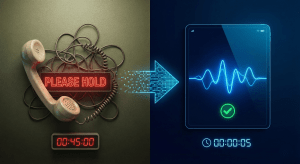
“For billing, press one. For technical support, press two. For all other inquiries, press three.” Almost everyone has been trapped in a phone menu like this, listening to a long list of options, guessing which category their problem fits into, and pressing zero repeatedly in the hope of reaching a person. Traditional interactive voice response (IVR) trees were designed to organize incoming calls, but for many customers they have become the most frustrating part of contacting a business. Conversational routing offers a better approach. Instead of forcing callers through rigid menus, it lets them simply say what they need in their own words, then uses AI to understand the request and send the call to the right place. The result is a faster, more natural experience for customers and smarter, more efficient routing for the business.
Why Traditional IVR Trees Frustrate Callers
Traditional IVR systems rely on fixed menus with a limited number of options, often several layers deep. Customers have to listen carefully, remember the options, and match their issue to categories that may not reflect how they think about the problem. If their issue doesn’t fit neatly, they guess, and a wrong guess sends them to the wrong department, where they wait again before being transferred. Over time, businesses tend to add more options to cover new situations, which makes menus even longer and harder to navigate. Many callers respond by pressing zero or saying “representative” immediately, bypassing the system entirely and defeating its purpose. The outcome is longer calls, more transfers, frustrated customers, and agents who start each conversation by calming someone down rather than solving their problem.
What Conversational Routing Is
Conversational routing replaces button-press menus with natural language. When a customer calls, they hear a simple prompt such as “How can I help you today?” and respond in their own words, for example “I need to change my delivery address” or “My internet has been down since this morning.” Speech recognition converts what they say into text, and natural language understanding identifies the caller’s intent, along with useful details like an order number, account name, or location. The system then routes the call to the best destination: a specific team, a skilled agent, a self-service flow, or an AI assistant that can resolve the request on the spot. If the request is unclear, the system can ask a short follow-up question instead of sending the caller back to the top of a menu. This approach is a natural evolution of the next-generation virtual agents now reshaping inbound support.
Benefits for Customers and Contact Centers
For customers, the biggest improvement is speed and simplicity. They don’t need to memorize menu options or guess which category applies to them. They just explain their issue and get connected. Routing accuracy improves because the system understands intent rather than relying on the caller to choose correctly, which means fewer transfers and less time spent repeating information. For contact centers, conversational routing reduces average handle time, improves first-contact resolution, and allows simple requests to be resolved through automation without involving an agent at all. It also captures rich data about why customers are calling, in their own words, which helps leaders spot trends, update knowledge bases, and improve products and processes. Agents benefit too, because calls arrive with context about the caller’s intent, allowing them to start solving the problem immediately rather than asking basic questions.
Designing a Conversational Routing Experience
Good conversational routing starts with understanding your callers. Review call recordings, ticket data, and existing IVR reports to identify the most common reasons people call and the words they use to describe them. Use those intents to design routing rules that connect each request to the right team or self-service option. Keep the opening prompt short and inviting, and plan how the system will confirm its understanding or ask clarifying questions when needed. Always provide an easy path to a human agent, especially for complex or sensitive issues. When a call does move from automation to a person, the transition should be seamless, with the conversation history and detected intent passed along, as we described in our guide to perfecting the bot-to-agent handoff. Combining this with CTI screen pops gives agents full context the moment they answer.
Making the Transition From Legacy IVR
Replacing a legacy IVR doesn’t have to happen overnight. Many organizations start by adding conversational routing to the front of their existing call flow, handling the most common intents while keeping traditional options as a fallback. As the system learns and accuracy improves, more of the old menu can be retired. Running the new and old approaches side by side for a period also makes it easier to compare results on metrics like transfer rates, abandonment, and customer satisfaction. Choosing a cloud-based contact center platform simplifies this process, since conversational AI, routing, analytics, and agent tools work together without complex on-premise integrations. Regular reviews of misrouted calls and unrecognized requests help fine-tune the experience over time, keeping routing accurate as your products, services, and customer needs change.
Let Customers Simply Say What They Need
Customers want to be understood quickly, not guided through a maze of options. Conversational routing replaces clunky IVR trees with a natural, efficient experience that gets callers to the right place the first time, reduces frustration, and frees agents to focus on meaningful conversations. It also gives businesses a clearer picture of why customers call and how to serve them better. If your current phone menu is causing more problems than it solves, it may be time to modernize. MaxLink Solutions helps businesses design and deploy AI-powered routing on cloud communication platforms built for modern customer experience. Reach out to our team to review your current call flow and see how conversational routing could transform the way customers reach you.