Zero-Friction Transitions: Perfecting the Bot-to-Agent Handoff in Real Time
Why the Bot-to-Agent Handoff Matters
The purpose of an AI virtual agent is not necessarily to keep every customer away from human support. In many situations, the best customer experience involves both. AI can handle repetitive or straightforward interactions efficiently, while human representatives can step in when a situation requires empathy, specialized knowledge, negotiation, or a more complicated decision. The problem occurs when the technology treats escalation as the end of one conversation and the beginning of another. From the customer’s perspective, however, it is still the same problem. They should not have to start from the beginning simply because the person helping them has changed.
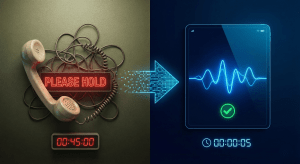
A frustrating handoff often sounds familiar: the customer explains the issue to an automated system, answers several questions, gets transferred, and then hears, “Can you explain what happened?” At that moment, much of the value created by the AI interaction disappears. The customer may feel that their time was wasted and that the business was not listening. This can be particularly damaging when the customer was already frustrated. A modern contact center should therefore treat the handoff as part of the overall customer journey rather than as a simple transfer between systems.
What a Zero-Friction Handoff Looks Like
A successful bot-to-agent transition should preserve as much relevant context as possible. Before connecting the customer to a representative, the AI should ideally understand why the customer contacted the business, what they have already tried, what information they have provided, and whether there are signs that the situation requires escalation. The human representative should receive that information before or at the moment the conversation reaches them. Instead of asking the customer to repeat everything, the agent can begin with an informed response such as acknowledging the issue and confirming the next step.
This changes the customer’s perception of the entire interaction. Rather than feeling as though they have been passed between disconnected systems, they experience one continuous conversation. The technology may change behind the scenes, but the customer does not have to feel that transition. This is the essence of zero-friction support: the handoff happens operationally without becoming another task for the customer.
Context Is the Most Valuable Part of the Handoff
The quality of a handoff depends heavily on the amount and relevance of information transferred to the human agent. Simply notifying an employee that “the customer needs support” is rarely enough. A useful handoff can include the customer’s original request, important details they provided, authentication status, previous troubleshooting steps, relevant account information, and the reason the AI determined that escalation was necessary. Depending on the business and its systems, it can also include a conversation summary or recommended next action.
This context allows the agent to spend less time reconstructing the interaction and more time actually solving the problem. It can also reduce repetitive questioning, which is one of the fastest ways to increase customer frustration. When customers have already provided information to an AI system, they reasonably expect the business to retain that information when they reach a human. AI-powered systems that preserve conversation history and customer context can therefore make escalation feel like a continuation rather than a reset.
Real-Time Escalation Should Be Based on More Than Keywords
A sophisticated handoff system should not rely solely on specific trigger words such as “supervisor,” “complaint,” or “refund.” Customers communicate frustration and urgency in many different ways. Someone may never explicitly say they are angry but may repeatedly explain that they have already contacted the business several times. Another customer may become increasingly frustrated after receiving several unsuccessful troubleshooting suggestions. A third may ask increasingly specific questions that indicate the issue is outside the AI’s permitted scope.
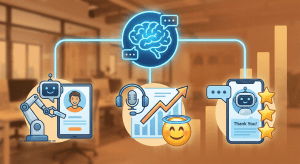
This is where conversational AI can add significant value. Instead of treating every conversation as a series of isolated questions, modern systems can consider intent, context, conversation history, and other signals to determine when a human is likely to provide a better outcome. The AI can continue handling simple requests while recognizing when the interaction has crossed a threshold where escalation makes more sense. A solution such as an AI conversation expert can support this broader approach by helping businesses create more intelligent conversational workflows instead of relying entirely on rigid scripts.
Giving Agents the Right Information at the Right Time
A handoff can still be inefficient even when information is technically transferred. If an agent has to open multiple screens, search through a long transcript, or manually identify the customer’s primary concern, valuable time can still be lost. The information needs to be presented in a useful format. A concise AI-generated summary can help the representative quickly understand the situation without reading an entire conversation from beginning to end.
For example, instead of presenting an agent with a long transcript, the system might summarize that the customer contacted support about a billing discrepancy, verified their account, discussed the charge with the AI, and is requesting clarification before making a payment. The representative can then begin the conversation with relevant context rather than generic questions. This also helps agents maintain a more natural tone because they are not forced to interrupt the customer repeatedly while trying to reconstruct the history of the interaction.
A modern AI receptionist can therefore play a role that goes beyond answering the phone. It can become part of the business’s overall routing and customer-experience strategy. The important distinction is that the AI should not act as a barrier between customers and employees. It should make the path to the right person easier. If a customer needs a human, the system should recognize that need and make the transition as smooth as possible.