SMS for Business: Why Texting Is the New Cold Call
Why Business Texting Is Gaining Attention
Phone calls can be effective, but an unexpected call may be ignored or sent directly to voicemail. Text messages provide a different experience because recipients can read and respond when it is convenient for them.
Business SMS can be useful for:
- Lead follow-ups
- Appointment reminders
- Customer updates
- Notifications
- Scheduling
- Service confirmations
- Two-way conversations
- Sales follow-ups
The goal is not simply to send more messages. Businesses should use SMS when texting genuinely makes communication easier for the customer.
SMS vs. the Traditional Cold Call
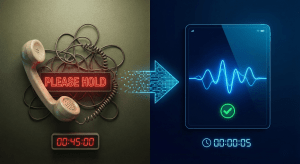
Cold calling requires the prospect to answer the phone at a specific moment. Texting gives the recipient more flexibility.
Consider the difference:
Cold call:
“Hi, do you have a few minutes to talk?”
SMS:
“Hi Sarah, this is Alex from ABC Company. You requested information about our service. Would you like me to send you the details here?”
The second approach allows the customer to respond when they are available.
SMS can therefore be particularly useful for initiating conversations with prospects who may not be ready to take a phone call.
Texting Can Make Lead Follow-Up Faster
Speed matters when responding to potential customers. A lead who submits a form or requests information may be contacting several businesses at the same time.
A timely text can acknowledge the inquiry and provide the prospect with a simple next step.
For example:
“Thanks for reaching out. We’d be happy to help. Would you prefer a call today or tomorrow?”
This creates a low-friction path toward a conversation.
Businesses can also combine SMS with broader contact center solutions to create more coordinated customer communication workflows.
SMS Supports Two-Way Communication
One of the biggest advantages of business texting is that it can support conversations rather than simply sending one-way notifications.
Customers can respond with questions, confirm appointments, request information, or indicate when they are available.
This can make SMS useful throughout the customer journey.
For example:
- A prospect submits an inquiry.
- The business sends a confirmation text.
- The prospect responds with a question.
- An employee answers.
- The prospect schedules a conversation or appointment.
The interaction can happen without requiring the customer to navigate a complicated phone menu.
Use SMS for Appointment Scheduling
Texting can also make scheduling more convenient.
Businesses can use SMS to:
- Confirm appointments
- Send reminders
- Offer available times
- Request confirmation
- Notify customers of changes
- Follow up after missed appointments
For organizations handling a high volume of customer communications, this can reduce unnecessary phone calls and make scheduling more convenient.
Better Integration with Business Systems
Modern cloud fax platforms often integrate with:
- Customer relationship management (CRM) software
- Electronic health record (EHR) systems
- Document management platforms
- Email applications
- Workflow automation tools
Integration reduces duplicate work and improves information accessibility across departments.
Keep Business Texts Short
SMS works best when messages are concise.
A customer should be able to understand the purpose of the message quickly. Avoid sending long paragraphs when a short message can communicate the same information.
A useful structure is:
Context + value + action
For example:
“Hi Mike, your service appointment is available this Thursday at 2 PM. Reply YES to confirm or let us know if you’d prefer another time.”
The message explains why the customer is receiving it and provides a clear action.
Connect SMS With Your Other Communication Channels
SMS is most effective when it works alongside other communication channels.
For example, a business might use:
- SMS for quick updates
- Voice calls for detailed conversations
- Email for longer information
- AI assistants for initial interactions
- Contact-center agents for complex customer needs
This creates a communication strategy that gives customers choices.
Businesses interested in expanding their communication infrastructure can also explore SMS solutions for business as part of a broader cloud communications strategy.
SMS and AI-Powered Communication
Businesses are also combining texting with AI-powered communication tools to handle routine interactions.
An AI system can potentially help answer common questions, collect basic information, route conversations, or determine when a human employee needs to take over.
For organizations looking to automate parts of their customer communication, AI virtual assistant solutions can complement SMS and other communication channels.
The goal should be to automate repetitive interactions while ensuring customers can reach a human when their situation requires personal attention.
When SMS Makes Sense
Business texting can be especially useful when customers need quick, convenient communication.
Consider SMS for:
- Lead follow-ups
- Appointment reminders
- Short customer updates
- Time-sensitive notifications
- Confirmation requests
- Simple questions
- Scheduling conversations
For lengthy explanations, complex problems, or sensitive discussions, another channel may be more appropriate.
Conclusion
SMS is not necessarily the complete replacement for cold calling. Instead, it gives businesses another way to start and maintain conversations with customers.
Texting can make lead follow-up less intrusive, simplify scheduling, support two-way conversations, and complement voice and email communication.
For businesses looking to modernize customer communication, the most effective approach is usually not to choose one channel over another. Instead, combine SMS, voice, email, and other communication tools according to what customers actually need.
With the right strategy, texting can turn a traditionally one-sided outreach process into a faster and more convenient customer conversation.