Real-Time Sentiment Tracking: Turning Frustrated Callers into Loyal Customers
What Is Real-Time Sentiment Tracking?
Real-time sentiment tracking uses AI to analyze customer interactions while they are taking place. Depending on the system, this can involve examining the customer’s words, conversational patterns, tone, pace, and other signals to determine whether the interaction appears positive, neutral, or negative. The purpose is not simply to assign a label to a conversation. The real value comes from using those insights to help the support team understand what is happening and decide what should happen next. If a customer begins the call calmly but becomes increasingly frustrated after several unsuccessful troubleshooting attempts, an AI-powered system can identify that change and provide the agent with a signal that the conversation may need a different approach.
This is particularly useful because sentiment is dynamic. A customer who starts an interaction angry may become satisfied after receiving a fast and effective solution, while a customer who initially sounds perfectly calm can become increasingly frustrated if they have to repeat information or wait too long. Looking only at a post-call sentiment score can hide these important changes. Real-time analysis allows businesses to observe the direction of the conversation and gives agents an opportunity to intervene before frustration becomes a full escalation. When combined with a modern contact center, sentiment intelligence can become part of the wider workflow rather than functioning as an isolated analytics tool.
Why Catching Frustration Early Matters
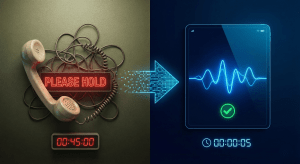
The earlier a business recognizes a deteriorating customer interaction, the more options it has to recover the experience. Imagine a customer calling because an important service has stopped working. The first few minutes of the conversation may be calm, but after being asked to repeat information, transferred between departments, or guided through troubleshooting steps that do not solve the problem, the customer’s patience begins to disappear. A traditional support system may continue treating the interaction exactly the same way because the customer has not explicitly said that they are unhappy. An intelligent system, however, can identify changes in the interaction and make the agent aware that frustration is increasing.
That information can influence how the agent responds. Instead of continuing with a rigid script, the representative might acknowledge the inconvenience, summarize what has already been attempted, avoid asking the customer to repeat information, and move toward escalation or resolution. This is where sentiment tracking becomes more than an analytics feature. It can become a real-time decision-support mechanism. The goal is not for AI to replace the agent’s judgment but to provide an additional signal that may be difficult to notice consistently during a busy conversation. When agents receive the right information at the right moment, they have a better chance of turning a potentially negative interaction into a successful recovery.
Turning Sentiment Data Into Better Agent Support
One of the strongest applications of real-time sentiment tracking is agent assistance. Customer service representatives are already listening, thinking, searching for information, documenting the interaction, and trying to solve the customer’s problem simultaneously. Expecting an agent to constantly evaluate emotional signals while managing all of these responsibilities can be challenging. AI can monitor the interaction in the background and surface relevant insights without requiring the representative to manually analyze every conversation.
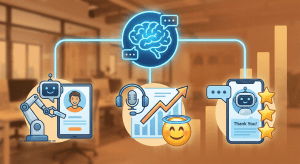
For example, if the system detects escalating frustration, it could prompt the agent to slow down, acknowledge the customer’s concern, summarize the situation, or consider involving a specialist. If the customer appears confused, the system could help the agent identify information that may need to be explained differently. If the customer has repeatedly asked about the same issue, the agent may receive a suggestion to provide a clearer explanation rather than repeating the same scripted response. These recommendations can be particularly valuable for newer representatives who may not yet have the experience to recognize every warning sign. An AI conversation expert can add another layer of intelligence to customer interactions by helping businesses understand and respond to conversational patterns more effectively.
From Escalation Management to Customer Recovery
A common misconception is that sentiment tracking is mainly about identifying angry customers so they can be transferred to supervisors. While escalation is sometimes appropriate, that should not be the only objective. The more valuable goal is often recovery. If every negative sentiment signal simply triggers a transfer, businesses may end up moving frustrated customers from one person to another without addressing the underlying problem. Instead, sentiment information should help determine what kind of intervention is most appropriate.
Sometimes the best response is simply giving the agent more context. In another situation, the customer may need a specialist with a particular type of expertise. A different customer may need a faster resolution rather than another explanation. In some cases, escalation really is the right option. The important point is that sentiment provides an additional piece of information that can help determine the response. When combined with customer history, call reason, account information, previous interactions, and current conversation context, sentiment can contribute to a much more complete picture of the customer’s experience.
Connecting Sentiment With the Rest of the Customer Journey
Sentiment becomes significantly more valuable when businesses connect it with other communication and customer-service capabilities. A customer who expresses frustration during a phone call may have previously contacted the business through email or chat. If the support team can see that history, the agent can understand the broader situation instead of treating the current call as an isolated event. This is one reason businesses are increasingly moving toward connected communication environments where voice, messaging, collaboration, and customer information work together.
For businesses using solutions such as cloud PBX, AI reception, messaging, and other communication tools, sentiment intelligence can become part of a larger customer-experience strategy. Rather than analyzing conversations only after the fact, organizations can use AI to understand what is happening during the interaction and combine those insights with other customer data. This creates opportunities for faster routing, more informed agent assistance, better follow-up, and more personalized support. The ultimate objective is not to collect more customer data simply for the sake of analytics. It is to make that information useful at the exact moment when it can improve the customer’s experience.
Real-time sentiment tracking gives businesses a way to recognize customer frustration while there is still an opportunity to do something about it. Instead of waiting until a customer submits negative feedback, cancels a service, or speaks to a supervisor, AI can identify conversational signals during the interaction and provide agents with valuable context. Used correctly, this technology can support faster intervention, smarter routing, better agent assistance, and more effective customer recovery.
The real goal is not simply to identify unhappy callers. It is to understand them early enough to respond better. When sentiment intelligence is combined with strong communication infrastructure, capable agents, customer context, and thoughtful escalation processes, even difficult conversations can become opportunities to demonstrate responsiveness. In that sense, real-time sentiment tracking is not just another contact-center feature—it can become a practical tool for turning moments of frustration into moments that strengthen customer trust and loyalty.